FREE DOWNLOAD
Family Emergency Planning Guide
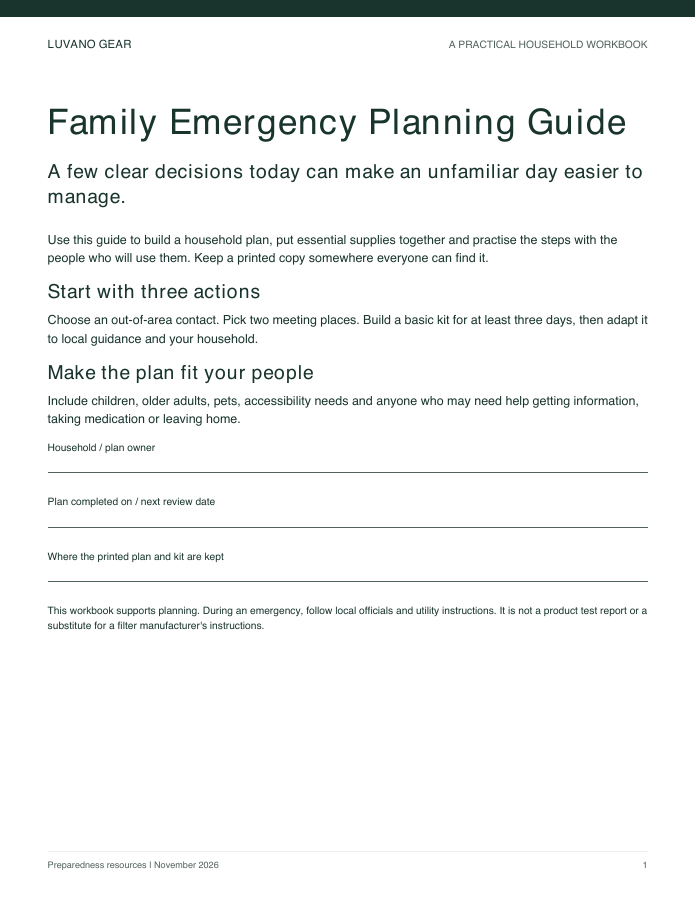
A seven-page workbook covering household contacts, meeting places, water supplies, essential equipment and a simple practice routine.
Download the guide ↓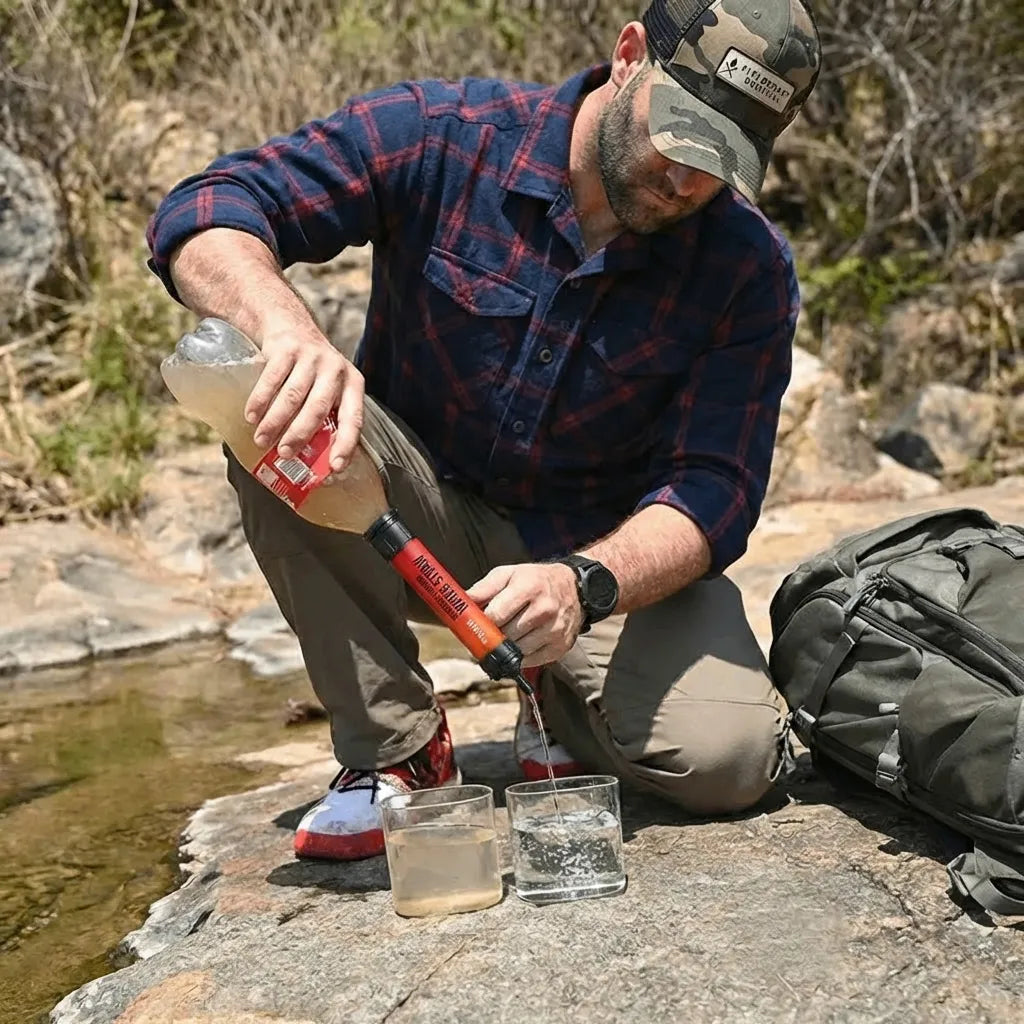
Keep a compact freshwater filter with your household supplies, hiking kit or travel bag. Choose enough for the people you are preparing for, and learn how to use it before you need it.
Simple gear. A clearer plan. Ready to carry.
Choose your pack, review your cart, then continue to checkout.
Shipping calculated at checkout
Two free preparedness downloads included
For freshwater use. Not a treatment for viruses, chemicals, heavy metals or saltwater. Follow the device instructions and local water advice.
The straw uses a hollow-fibre membrane to filter freshwater as it passes through the device. It is intended to help remove particulate contaminants such as sediment, along with the organisms covered by the manufacturer's specification.
A filter has limits. This product is not intended to remove viruses, dissolved chemicals, heavy metals or salt. Clear-looking water can still contain contaminants, and filtering may need to be combined with another treatment depending on the source and local advice.
Read the instructions supplied with the device before first use. Do not use a water source affected by fuel, industrial contamination or an official do-not-use notice.
Keep a filter with outdoor equipment, a travel bag or a household emergency kit. It is a portable tool for situations where suitable freshwater needs filtration and the device is appropriate for the contaminants involved.
A water-supply interruption can also affect cooking, cleaning and sanitation. Store drinking water in advance, know where official local information is published, and make a plan that covers everyone in the household.
The included guide and checklists help you put those decisions on paper. A filter is one part of preparation, alongside stored water, communication and a route to help.
The bottle-compatible design lets you use a compatible water bottle with the filter. Follow the included instructions for connection, first use, filtering and cleaning rather than forcing a connection that does not fit.
Keep the clean outlet and drinking container separate from untreated water. Check the device for damage, understand the flow direction and practise with the equipment before putting it into an emergency bag.
The filter works without electricity or batteries. Follow the manufacturer's care and cleaning process after use.
Keep the device protected from damage and follow the manufacturer's storage instructions. Inspect your kit regularly and make sure everyone who might use it can find the instructions.
The source manufacturer lists filtration capacity of up to 1,800 gallons. Actual service life depends on water quality, use and maintenance; a capacity figure is not a guarantee that every water source is safe or that the filter will last indefinitely.
Replace damaged or unsuitable equipment. Include the filter in your normal kit checks alongside stored water, food, batteries and other supplies.
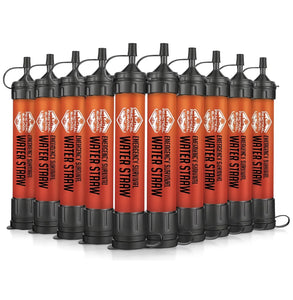
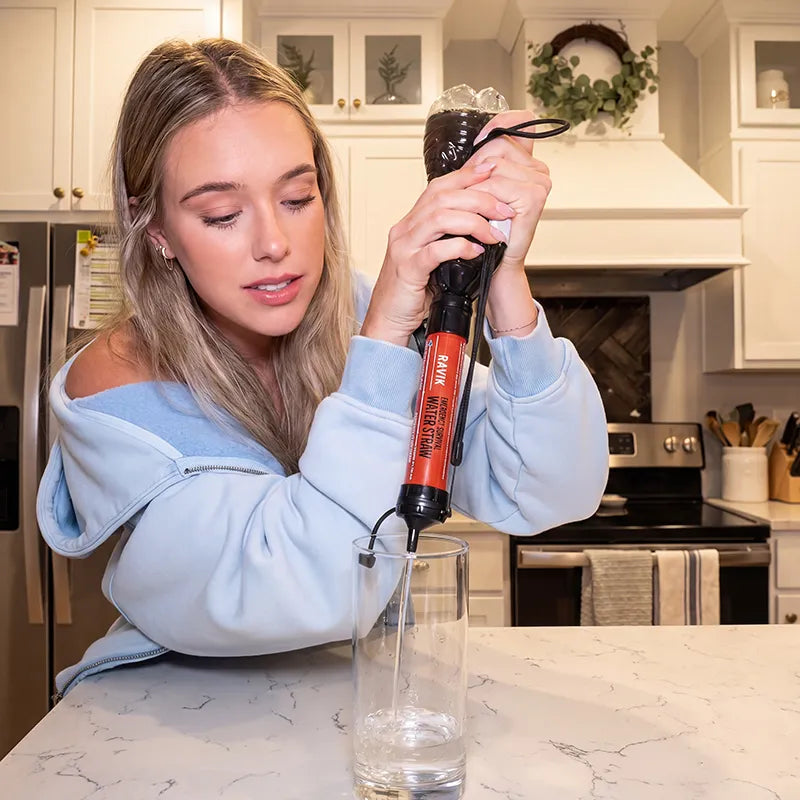
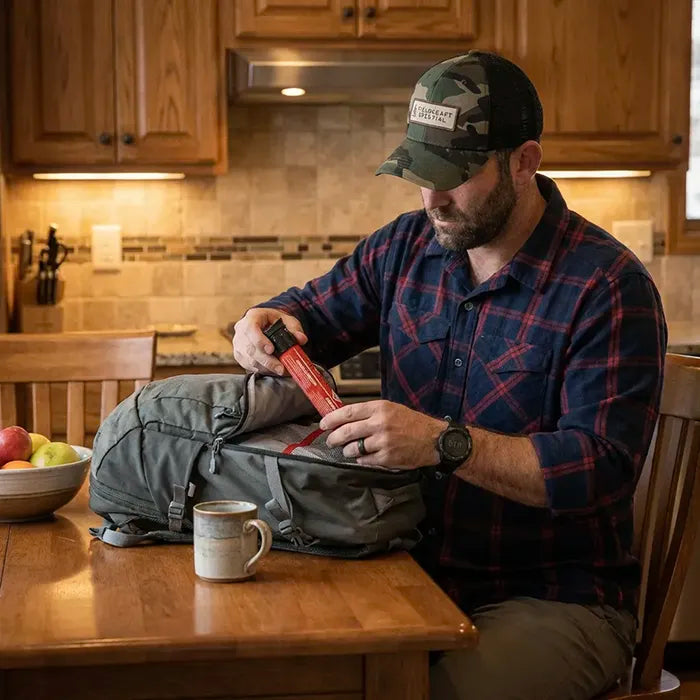
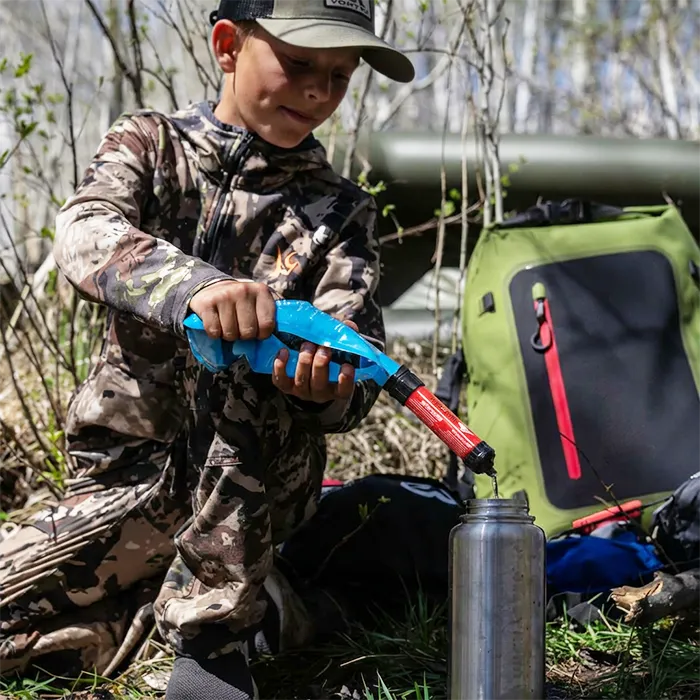

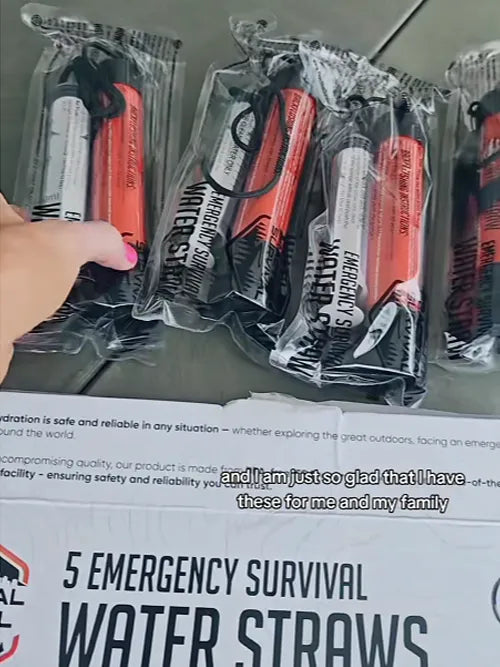
Explore the product format and bottle connection. For safe operation, follow the instructions supplied with your device.
Make the equipment part of a plan. Download both resources now, print the pages you need and keep a copy with your supplies.
A seven-page workbook covering household contacts, meeting places, water supplies, essential equipment and a simple practice routine.
Download the guide ↓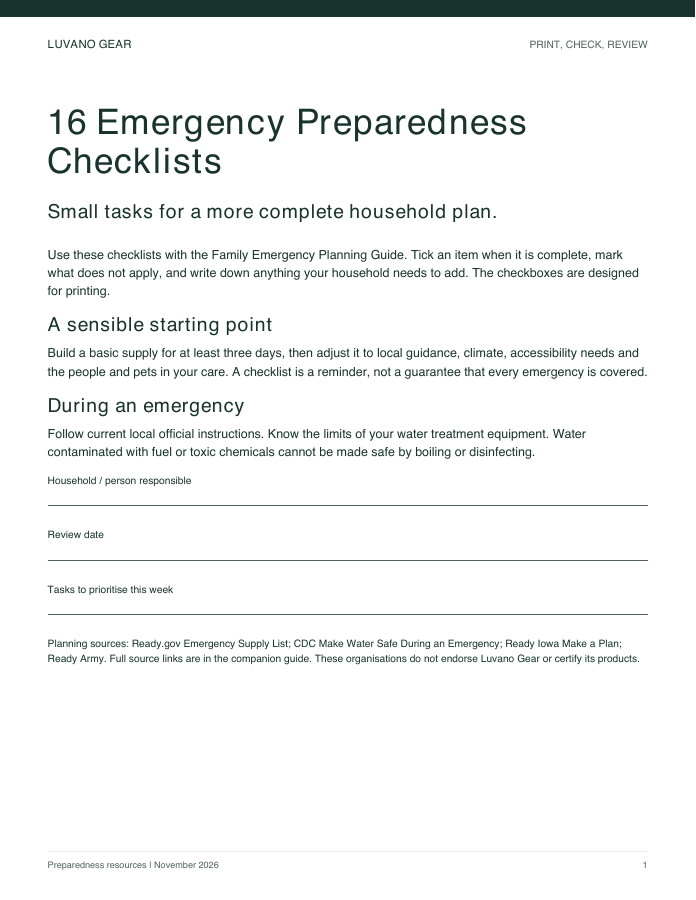
Nine printable pages with practical checklists for water, food, evacuation, pets, medication arrangements and kit maintenance.
Download the checklists ↓At one gallon per person per day for drinking and sanitation:
| 2 people | 6 gallons |
|---|---|
| 4 people | 12 gallons |
| 5 people | 15 gallons |